Comprehensive psychoeducational assessment
Comprehensive Psychoeducational Assessment
When something about how your child learns, focuses, or gets through school isn't making sense, one thorough assessment looks at everything at once, not just the presenting question. One evaluation, the whole child, and clear recommendations you can take to the school.
At a glance
What to know before you start
Who it's for
Students from age 7 through college who struggle with learning, focusing, or managing school.
What it is
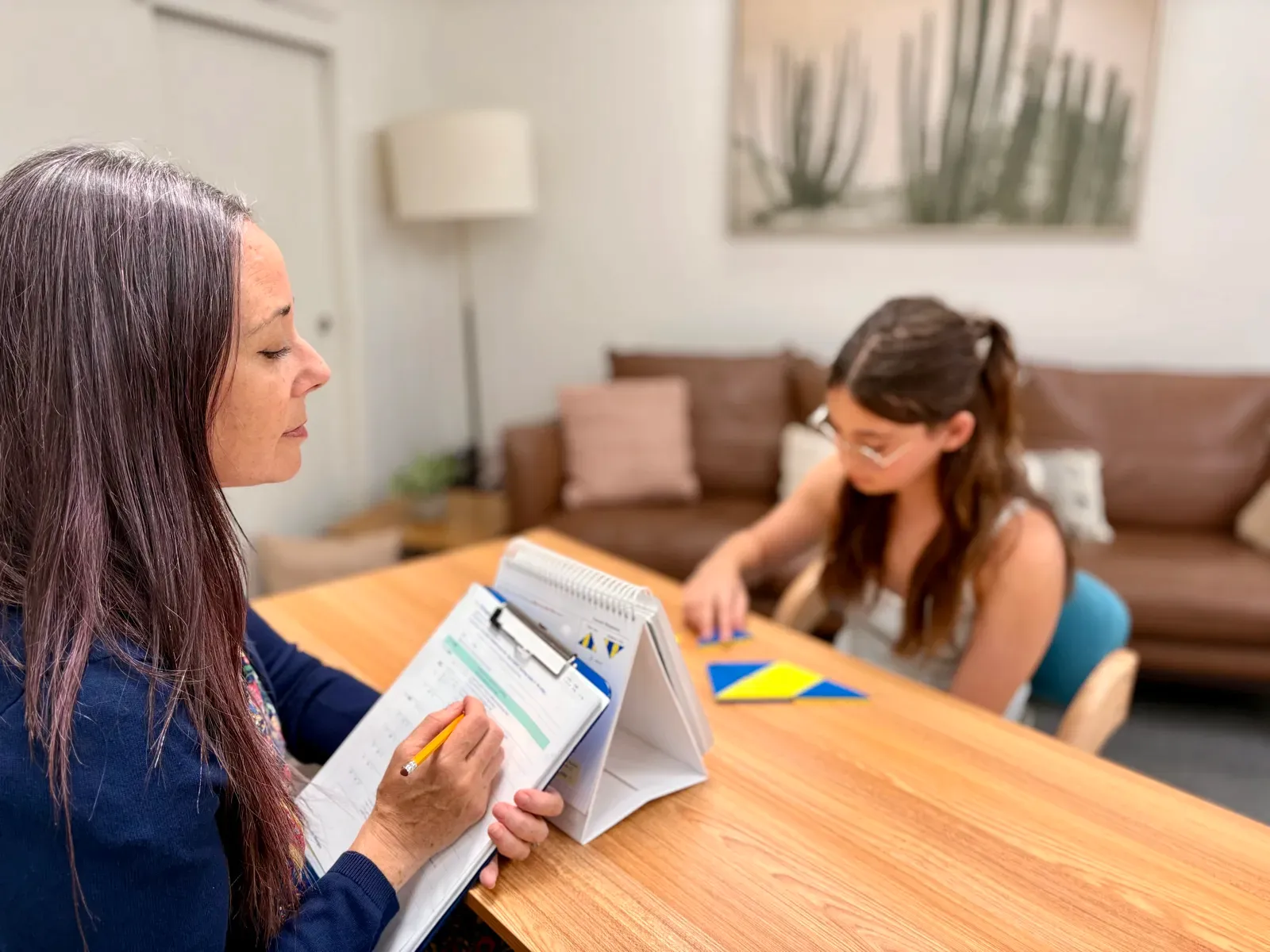
One thorough psychoeducational assessment evaluating every angle: cognition, attention, memory, academic skills, processing, and social-emotional wellbeing.
Where
In person in Pasadena, in your home across the Los Angeles area, or remotely for any student in California.
How to start
A free 20-minute consultation to hear your concerns and decide whether an assessment is the right next step.
Book TodayOne assessment, not several
A comprehensive evaluation, not a set of separate tests
A parent reached out wondering if ADHD was the reason their high schooler, who had always done well, was suddenly hitting a wall. His struggles with reading and spelling did not align with how bright he was, so I kept looking for answers, evaluating his phonological processing and decoding. It was actually dyslexia, compensated for by sheer intellect for years. Another family came in with concerns about ADHD. The intake interview surfaced something else, before testing had even started: behavioral rigidity, trouble with peers, social withdrawal, and sensory sensitivities. Recognizing these characteristics of autism informed my assessment, prompting me to evaluate these areas deeply. This ended up reframing everything, leading to a diagnosis that completely transformed his support plan. Testing for one thing at a time is how students get missed.
I provide a single, comprehensive psychoeducational assessment, because the whole picture is what produces useful answers. The areas I specialize in (twice-exceptional and gifted profiles, ADHD and executive functioning, autism, learning differences) are lenses within that one evaluation, not separate offerings.
The difference shows up in the report. Instead of relying on clinical jargon like "weak fluid reasoning" or "poor retrieval fluency," I translate those concepts into what they actually look like during the school day, at home, and in how your child feels about themselves. The recommendations are equally individualized, leveraging your child's unique strengths and interests across the Five Environments: intellectual, physical, emotional, social, and creative. You will also receive vetted, trusted referrals to specific professionals and organizations I personally stand behind.
I work with students age 7 and up, through grade school to higher education. If your student doesn't fit neatly into one category, or if previous testing left more questions than answers, that's exactly the kind of case where a comprehensive evaluation finds what the narrower one missed.
The complete picture
What a full assessment looks at
Cognitive & reasoning
How your child thinks, problem-solves, and reasons.
Memory & processing speed
Working memory (visual and verbal), and how quickly information gets taken in.
Attention & executive function
Focus, planning, task initiation, and follow-through.
Academic skills
Measuring reading, writing, and math performance to identify specific strengths and learning gaps.
Auditory & visual processing
How your child's brain interprets, organizes, and remembers the information they see and hear.
Social-emotional wellbeing
Understanding anxiety, mood, behavior, self-regulation, and how your child feels about school and themselves.
The assessment process
The Process
Every assessment starts by looking at the whole child, not a single presenting question. If something else surfaces during testing, I widen the lens.
Free consultation
A 20-minute conversation to answer your questions and decide together if a comprehensive assessment is the right next step.
Intake & records
We gather history, school records, and your observations, along with parent and teacher rating scales, so testing begins from a full picture.
Testing sessions
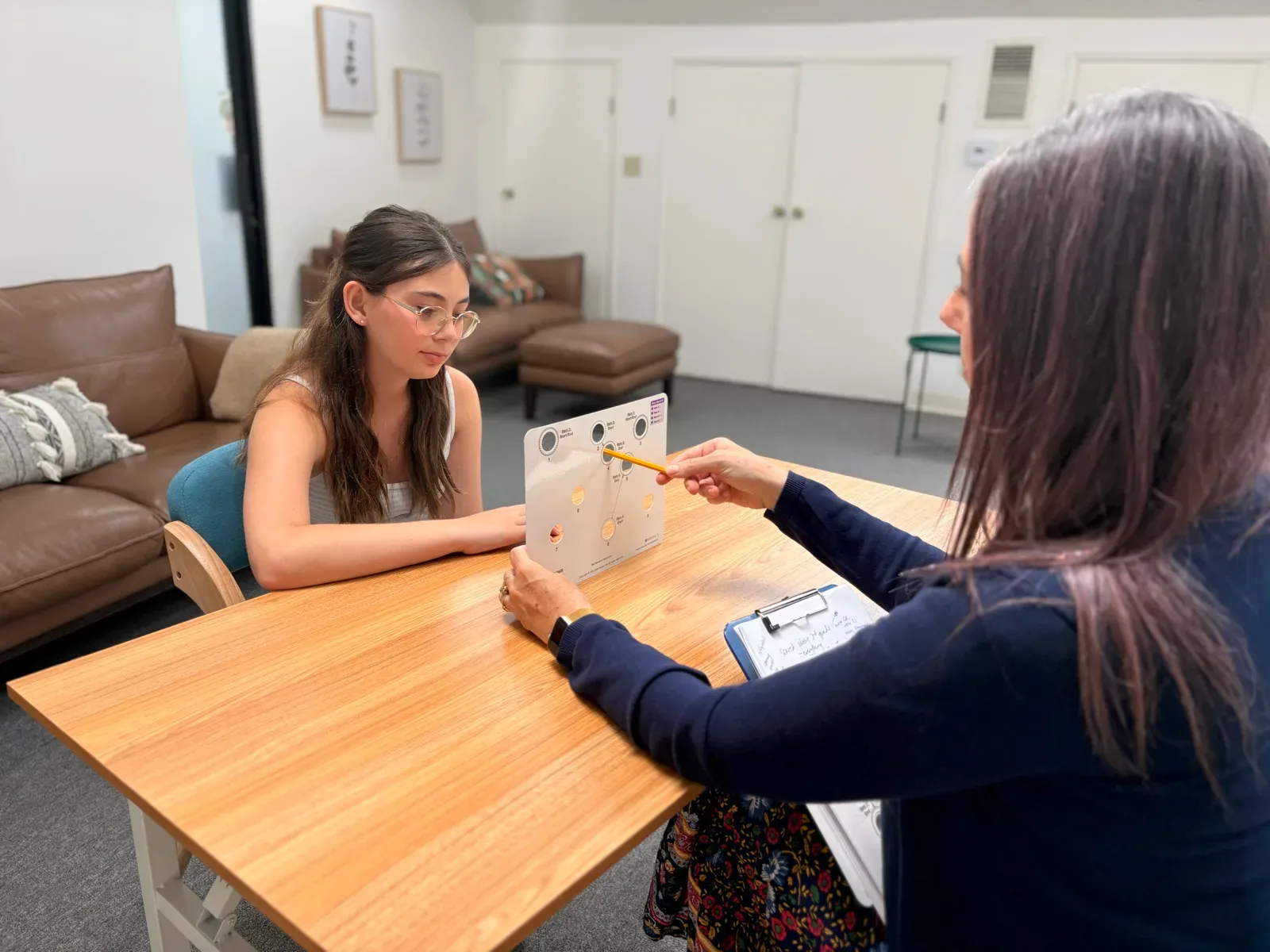
Usually three to four sessions paced for your child's comfort and stamina. Sessions take place in person in Pasadena, in your home, or remotely across California.
Report & review
A detailed report, followed by a dedicated sit-down to walk through findings, recommendations, and next steps together.
How we meet
In person, in your home, or remote
In person, Pasadena
Testing typically takes place at my Pasadena office, the usual option for families in the greater Los Angeles area.
In your home, greater Los Angeles
I can travel to your home for testing sessions. This option works well for students who are more comfortable in a familiar environment. It's available in the Los Angeles area for an additional fee, and we'll discuss specifics during the consultation.
Remote, any student in California
Remote assessment is available for any student in California over a secure telehealth platform: the same evaluation, adapted for remote administration, without the commute.
Sound familiar?
What parents are noticing when they call
A bright student hitting a wall
A historically strong student (often in high school, often twice-exceptional) suddenly spends hours on homework, loses papers, forgets to submit assignments, and dreads school. The intellect that quietly carried them for years can't keep compensating as the load increases, and the exhaustion shows up at home first.
Smart, but schoolwork is a battle
A highly verbal, creative younger child (deep into space, Legos, or animals) who refuses to write, struggles with reading fluency, and melts down over simple worksheets. They say things like "school is stupid" or "I'm not smart," despite obvious problem-solving ability in real life.
Constant disorganization
A student losing track of time, missing deadlines, and struggling to follow multi-step directions. Teachers say "quiet" or "daydreamy," while at home you see a kid who's depleted, emotionally reactive, and stuck on starting even the smallest task.
What a comprehensive assessment covers
Worried about something specific? See how I work with each, and how the assessment gets at it.
Twice-Exceptional & Gifted
For gifted students who also have a learning, attention, or developmental difference. I assess for both, so nothing is missed.
ADHD & Executive Functioning
A close look at attention, focus, and the planning-and-follow-through skills that shape how school actually goes.
Autism
A careful, strength-based autism evaluation set within the whole-child picture.
Learning Differences
Assessment for dyslexia, dysgraphia, and dyscalculia: the differences behind reading, writing, and math struggles.
Testimonials
What families say
We walked away feeling like we understand our son so much better and, most importantly, feel better equipped to support him.
I realized we were in good hands when Erica told us she would be focusing on what our daughter can do instead of the things she can't.
This was a very in depth investigation into the workings of my son's mind, how he learns, and what makes him tick.
Her strength-based approach to assessment, her deep 2e expertise, and the way she talks about changing the box to fit the kid instead of forcing the kid into the box? That's my language.
We did a lot of research before deciding on who should assess both our teenage sons and Erica was a standout first choice. She is thoughtful, insightful, and incredibly thorough. Both kids loved her.
What stood out most was how deeply she cares about advocating for children and making sure they feel seen, understood, and supported.
We gave her an impossible deadline and she somehow delivered a day ahead of schedule, and her report was incredibly comprehensive and accurate.
We met with 7 other practitioners before selecting Erica and I'm so glad we made the choice we did.
Common questions about the assessment
What ages do you assess?
I work with students age 7 on up, through the school years and into college, as long as they're currently enrolled. If you're not sure whether your student is a fit, reach out and we'll talk it through.
What is a psychoeducational evaluation, and what does it tell you?
A psychoeducational evaluation is a comprehensive assessment of how a student learns, thinks, and processes information, including cognitive ability, academic skills, attention, memory, and social-emotional wellbeing. It tells you not just whether a student is struggling but why, and it produces a written report with concrete recommendations for school, home, and when relevant, for disability accommodations.
How long does the assessment process take from start to finish?
The path is: a free 20-minute consult, then intake and records review, testing sessions, data collection, your written report, and a review meeting. How long that takes depends on scheduling, how quickly records come through from the school, and the areas being assessed. Your report reaches you three days before the review meeting, so you have time to read it before we talk. Typically, the entire process is 4-6 weeks.
How many sessions are required, and how long is each?
A comprehensive assessment generally requires three to four testing sessions of about two to three hours each, paced for your child's comfort, plus the first consultation and a review meeting at the end. The number and length can vary with your child's age, the areas being assessed, their pace, and the breaks they need.
My child is avoiding or refusing school. Can an assessment help figure out why?
That's one of the better uses of an assessment. School refusal is rarely one thing, and without objective data you are guessing at which thing it is. So I test broadly, and I evaluate social-emotional functioning separately from all of it. That shows whether an undiagnosed learning difference, dyslexia or a visual processing problem, is making the school day cognitively exhausting, or whether it is anxiety, or the emotional toll of trying to keep up. I also interview you, your student, and their teachers. And I watch how they are with me while we work. Which tasks make them tense up or stall, and which ones they visibly enjoy. That tells me about frustration tolerance and how they cope, and it usually arrives before the scores do.
What does the assessment cost?
We go over costs during the free consultation, so you have a clear outline before anything is scheduled. I also offer 6 months of interest-free financing as an option.
Can the assessment be done remotely?
Yes. In-person testing takes place at my Pasadena office. Remote assessment is available for any student in California over a secure telehealth platform. In-home testing is available in the Los Angeles area for an additional fee.
Does the assessment cover more than one concern at a time?
It always does. A comprehensive assessment looks at the whole child (attention, cognition, learning, processing, and social-emotional wellbeing together) because these rarely act independently. If a student comes in with one question and I notice signs of something else, I widen the lens rather than stopping at the presenting concern.
Start with a conversation.
A free 20-minute consultation is enough to hear what's going on and figure out whether a comprehensive psychoeducational assessment is the right next step for your student.
Book Today