A specialty focus
Understanding Twice-Exceptional & Gifted Learners
A gifted child who is also struggling can be hard to read because their strengths and difficulties tend to hide each other. Understanding the full picture requires looking at both together rather than treating either in isolation.

When a child is gifted and struggling, the usual answers don't fit
You've probably heard both stories about your child, sometimes in the same week. They're so bright. They're just not applying themselves. One teacher sees the spark. Another sees the missing homework. The testing so far came back "fine," and yet you're still here, because that word has never matched what you see.
- Reads years above grade level but melts down over a short writing assignment
- Asks astonishing questions, then forgets to turn in the work that proves what they know
- Gets called "lazy" for a brain that's actually working overtime to compensate
- Has been told they can't be gifted and have ADHD or dyslexia
- Feels like the smartest kid in the room and the most lost, at the same time
None of that is a contradiction. It's a profile, and it has a name.
What twice-exceptional (2e) means
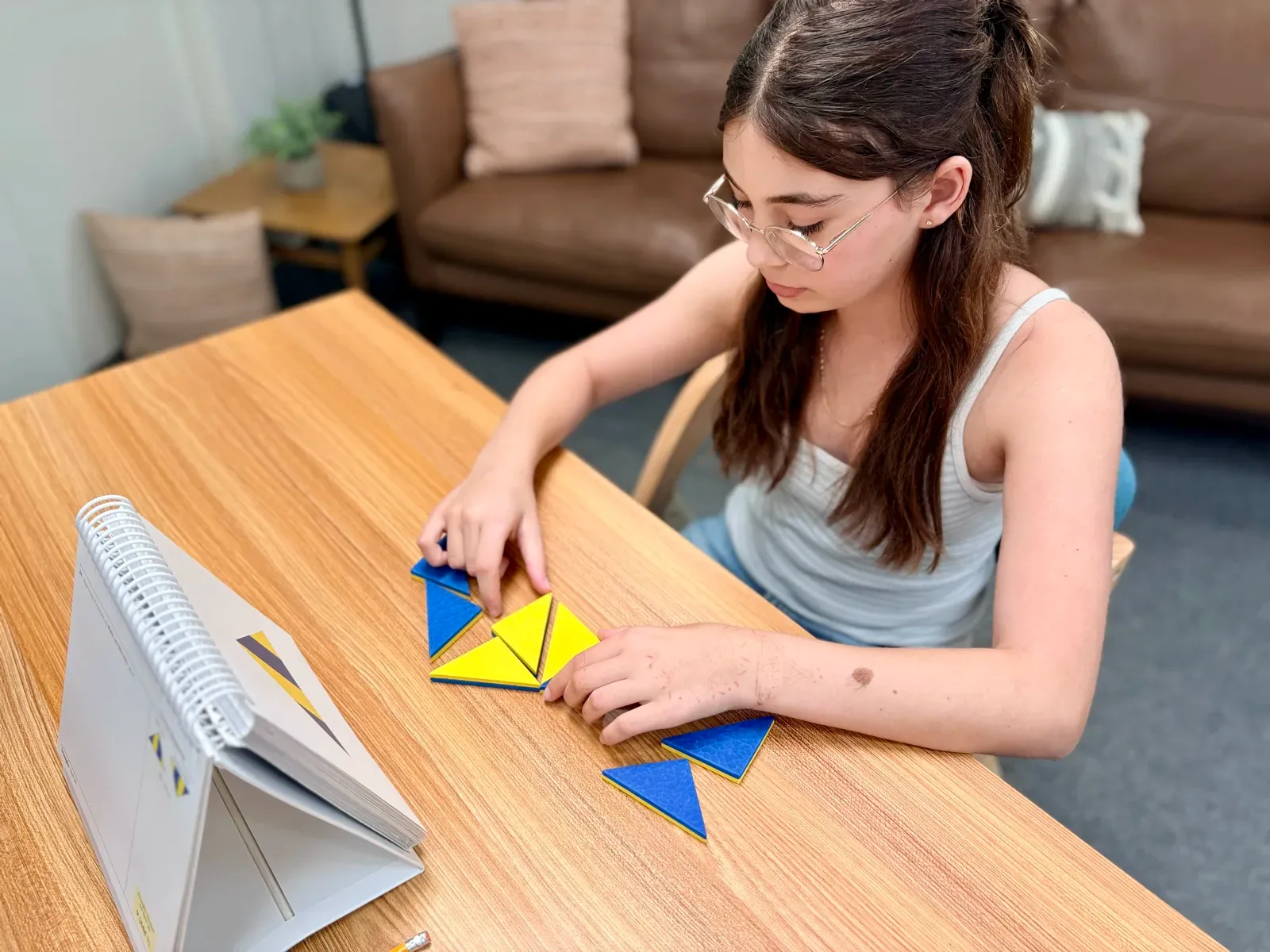
A twice-exceptional learner is a student with genuine gifts or advanced abilities and a learning, attention, or developmental difference (dyslexia, ADHD, autism, or another profile). Both are real, and both are happening at once.
Here's why 2e is so easily missed: the two sides mask each other. A gifted child uses raw ability to compensate, so they stay at grade level and no one flags a problem. They just work twice as hard for the same result. Or the learning difference pulls test scores down until the giftedness disappears from view. Giftedness and a learning difference interact, and more general testing tends to flatten the result into an unremarkable-looking average.
I look for both at once. That's the whole point of a 2e assessment: to hold the strengths and the challenges in the same frame. The struggle was never the whole story, and the gift was never the only one.
This is the work I trained for specifically. I hold a postgraduate certificate in Twice-Exceptional Education from Bridges Graduate School.
More about Erica and her backgroundGifted & IQ testing
Sometimes the question is simpler
Is my child gifted? For a private-school application, a program with an IQ requirement for entry, or just for your own understanding of how your child's mind works.
I provide gifted and IQ testing using standardized measures of reasoning and problem-solving to gauge cognitive ability and intellectual potential. When that testing surfaces a learning or attention difference sitting alongside the giftedness, which it often does, I can widen the evaluation rather than send you elsewhere to start over. You get the full answer in one place.
How I assess for it
How the assessment looks at 2e profiles
A twice-exceptional profile means holding the strengths and the challenges in one frame. A comprehensive psychoeducational assessment looks at:
Cognitive ability
Where a child's reasoning and problem-solving are advanced for their age.
Academic skills
Measuring reading, writing, and math performance to identify specific strengths and learning gaps.
Learning & attention
The dyslexia, ADHD, or autism that may sit alongside the strengths.
Social-emotional
Understanding anxiety, mood, behavior, self-regulation, and how your child feels about school and themselves.
One thing standard evaluations get wrong: they lean on the Full Scale IQ score. For a 2e student, a lower working-memory or processing-speed score pulls the composite down until they look "average" on paper, and the giftedness disappears. I analyze alternative indices, like the General Ability Index, and the gaps between scores themselves. A student reasoning in the 99th percentile with average processing speed lives with real friction, even when every individual number looks "fine."
It's one evaluation, built to see the whole profile. See how the comprehensive assessment works
Common questions about 2e & giftedness
What makes a learner twice-exceptional?
A twice-exceptional learner is a student who is gifted and also has a learning, attention, or developmental difference, like dyslexia, ADHD, or autism. The two sides often mask each other, which is why these profiles get missed. An assessment that looks at both is what brings the whole picture into focus.
What if my child is facing multiple challenges at once?
Yes, it is common to see several conditions occurring at once. Every evaluation looks at the whole child rather than one narrow slice, which lets me widen the scope when the evidence points somewhere new, rather than stopping at the question you came in with.
My school already evaluated my child. Why would I need a private assessment?
School evaluations are tied to eligibility for special education services, so they naturally answer a narrower question. Furthermore, standard school evaluations are rarely nuanced enough to capture a twice-exceptional (2e) profile, and most school psychologists do not have specialized training in recognizing these unique learners. A private assessment is independent, strength-based, and designed to understand exactly how your child learns. The resulting report provides deep, individualized insights and highly specific recommendations that you can confidently bring to an IEP or 504 team, a private placement, or outside specialists.
How many sessions are required, and how long is each?
A comprehensive assessment generally requires three to four testing sessions of about two to three hours each, paced for your child's comfort, plus the first consultation and a review meeting at the end. The number and length can vary with your child's age, the areas being assessed, their pace, and the breaks they need.
Can my child be assessed remotely if we don't live near Pasadena?
Yes. In-person testing takes place in my Pasadena office. Remote assessment is available for any student in California, over a secure telehealth platform. The setup is controlled: testing materials mailed ahead, a parent proctoring, and a second camera, so the administration stays standardized.
What ages do you assess?
I work with students age 7 on up, through the school years and into college, as long as they're currently enrolled. If you're not sure whether your student is a fit, reach out and we'll talk it through.
What does effective support for a 2e student look like?
It requires a balanced approach that addresses both sides of their profile: providing targeted support for their challenges while actively nurturing their intellectual strengths. Most plans only focus on the struggles. In my reports, I help families and schools understand how to adapt the learning environment to fit the student, rather than forcing the student into a pre-existing box. This ensures they receive the accommodations they need to manage their difficulties, alongside the advanced opportunities they need to stay engaged. A student should never have to choose between being supported and being challenged.
What do schools most often get wrong about 2e students?
Schools typically miss these students in one of two ways. Some focus entirely on their deficits, leaving their intellectual strengths completely unnurtured. Others miss the struggle altogether because the student is earning average grades by overcompensating, which fails to trigger the red flags that prompt school-based help. However, this constant masking comes at a high cost, often showing up at home as fatigue, anxiety, and burnout. My reports lay out the student's true, uneven learning profile, demonstrating that "average" school performance can actually represent significant underachievement relative to their actual potential.
What does an assessment cost?
During your free 20-minute consultation, I'll give you a clear outline of the costs involved before anything is scheduled. I also offer 6 months of interest-free financing as an option.
Other areas the assessment covers
ADHD & Executive Functioning
A close look at attention, focus, and the planning-and-follow-through skills that shape how school actually goes.
Autism
A careful, strength-based autism evaluation set within the whole-child picture.
Learning Differences
Assessment for dyslexia, dysgraphia, and dyscalculia: the differences behind reading, writing, and math struggles.
Let's find the answers you need to support your child's learning and growth.
A free 20-minute consultation is enough to understand your concerns and decide whether a gifted or 2e assessment is the right next step.
Book Today