
A specialty focus
Understanding Autism
If you're wondering whether your child might be autistic, it helps to get a clear picture of how they think, communicate, and move through the world. Autism is one of the areas I look at most closely, ensuring the final evaluation gives you clear, practical answers you can actually use.
The signs parents notice

The child who wants to talk about one thing, in depth, at length, at any available moment. The one who knows exactly how the morning routine goes and needs it to go that way. The student who reads the room differently than their peers do, or who finds group projects exhausting in a way they can't quite explain.
Sensory things come up too: textures, sounds, or transitions that feel much louder than they should. Or a student who doesn't seem to notice things that bother everyone else. The patterns are real. They just don't always look the way people expect autism to look. Some students, especially girls and strong compensators, mask their challenges well enough that the signs show up late, or get read as social anxiety instead.
Autism assessment is available in person at my Pasadena office, in your home in the Los Angeles area, or remotely over a secure telehealth platform for any student in California.
The bigger picture
Understanding overlapping challenges
Autism often co-occurs with other differences, such as ADHD, anxiety, or OCD, and these overlapping layers completely change what a student needs. For example, an autistic child who also struggles with ADHD-related attention and impulsivity requires a very different support plan than a child whose focus is steady. Similarly, behavioral rigidity that looks like stubbornness reads quite differently once you understand it is actually driven by anxiety. Evaluating how these pieces interact is key to building a plan that actually works.
Giftedness adds another layer. In twice-exceptional students, intellectual strengths can mask autism traits for years. A student who compensates well enough to get by often doesn't get identified until the demands outpace the coping strategies.
A quick yes-or-no on a single label rarely tells a family what to do next. Naming autism alongside any other co-occurring conditions yields a different kind of answer, and provides clear and specific steps to take at home and at school.
How I assess for it
How the assessment looks at autism
Autism shows up differently in every child, so I look at it across the whole picture rather than from a single angle. A comprehensive psychoeducational assessment looks at:
Social communication
How your child connects, reads social cues, and shares attention.
Sensory & patterns
Sensory sensitivities, routines, and the patterns you see across settings.
Language & cognition
Language, reasoning, and how your child takes in the world.
Everyday functioning
How your child manages the ordinary demands of a day.
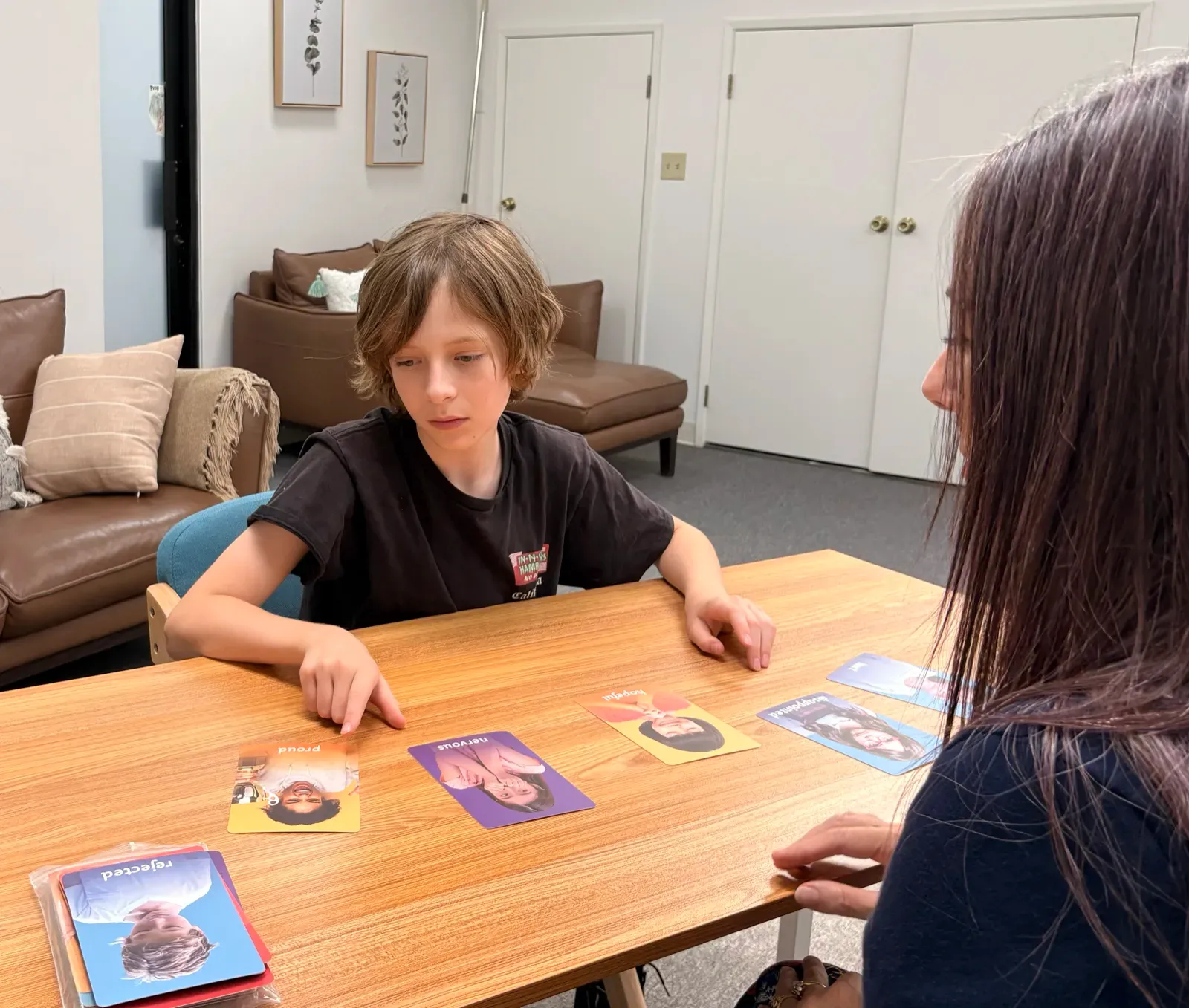
Observation carries more weight here than in most evaluations. Rigid checklists and stereotypes miss too much, particularly in students who have learned to mask their struggles. Alongside standardized measures and rating scales, I watch. I bring out sensory objects to see directly what registers and what overwhelms. I also conduct clinical interviews to closely observe their natural communication style and how they navigate social interaction. This hands-on, observational approach is how we capture the nuances that standardized tests alone might miss.
It's one evaluation, not a standalone autism test. See how the comprehensive assessment works
Common questions about autism
What ages do you assess?
I work with students age 7 on up, through the school years and into college, as long as they're currently enrolled. If you're not sure whether your student is a fit, reach out and we'll talk it through.
Does autism often come with other differences?
Very often, yes. It is common for autism to overlap with challenges like ADHD or anxiety, and these layers change how a student experiences the world. For example, anxiety can heighten social difficulties and impact school performance, while ADHD attention and executive struggles overlap so closely with autism that they require careful separation during testing. Identifying how these different areas interact is what ensures a support plan actually meets your child's needs, which is why I evaluate all of them together in a single assessment.
What does an autism evaluation actually involve?
It looks at social communication, sensory and behavioral patterns, cognitive and language ability, attention, and learning. The data comes from standardized measures, rating scales completed by you and your child's teachers, interviews about developmental history, and direct observation. At the end you get a written report explaining what was found, how it fits together, and what it means for school and home.
Can you actually diagnose autism, or only identify it for school purposes?
Both. As a Licensed Educational Psychologist, I'm qualified to diagnose autism spectrum disorder using DSM-5 criteria, a clinical diagnosis. I also provide recommendations regarding special-education eligibility for autism. So the evaluation serves both roles: a formal clinical diagnosis, and guidance for educational identification and support planning.
What should I understand about an autism diagnosis, and what changes at school and at home?
Autism is a neurodevelopmental difference in how the brain is wired. It's a different way of experiencing and interacting with the world, not a deficit. Alongside the challenges, many autistic students have real strengths, including attention to detail, deep focus on interests, and unique problem-solving. With that understanding, school and home environments can provide concrete support to allow a child to engage meaningfully and confidently in both settings.
Will schools and colleges accept the report?
Yes. The written report is the documentation schools, IEP teams, colleges, and disability services offices use to determine eligibility and build accommodations. I write reports that meet those standards and hold up in educational settings.
Other areas the assessment covers
Twice-Exceptional & Gifted
For gifted students who also have a learning, attention, or developmental difference. I assess for both, so nothing is missed.
ADHD & Executive Functioning
A close look at attention, focus, and the planning-and-follow-through skills that shape how school actually goes.
Learning Differences
Assessment for dyslexia, dysgraphia, and dyscalculia: the differences behind reading, writing, and math struggles.
Let's look at the whole picture.
A free 20-minute consultation is a good place to start, enough to understand what you're seeing and whether an autism assessment makes sense as a next step.
Book Today